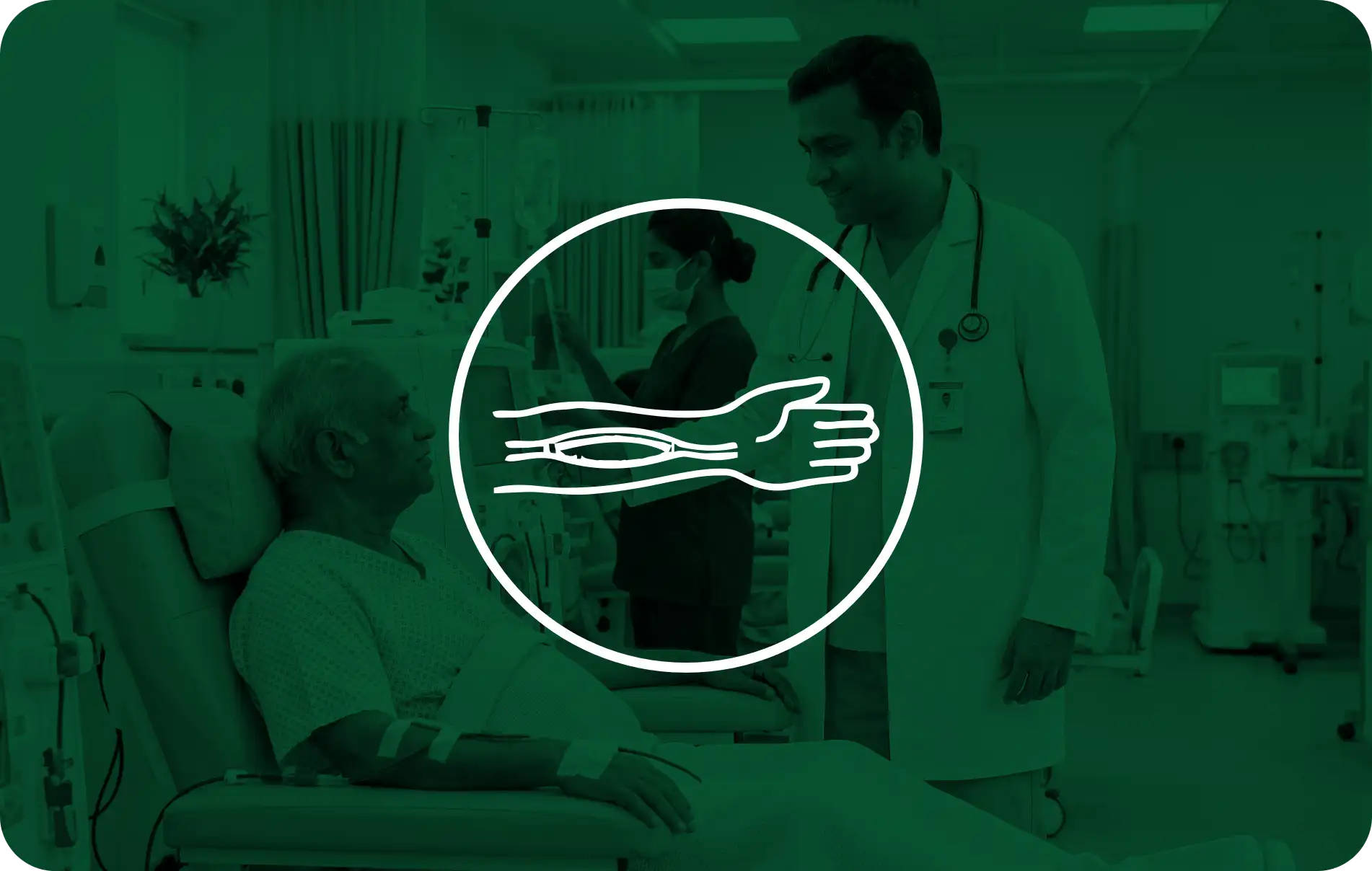
An AV graft uses a soft synthetic tube to connect an artery to a vein beneath the skin, creating an access for dialysis when the patient's own veins are too small or
weak for a fistula. The tube is placed in the arm or, in some cases, the thigh. Patients who ask a kidney doctor in Mumbai why a graft was chosen over a fistula are usually told that their veins are not suitable. Grafts can usually be used earlier than a fistula once swelling settles.
How the Procedure Can Help
A graft gives a reliable access site for patients who cannot have a fistula and can often be used sooner, which is helpful when dialysis cannot wait. It provides sufficient blood flow for effective haemodialysis.
Risks and Considerations
Grafts are more prone to clotting, narrowing and infection than fistulas and may need repeated procedures to keep them working. Swelling, poor blood supply to the hand and the need for eventual replacement are possible. Good hygiene and prompt reporting of redness, pain or loss of the buzzing sensation are important.