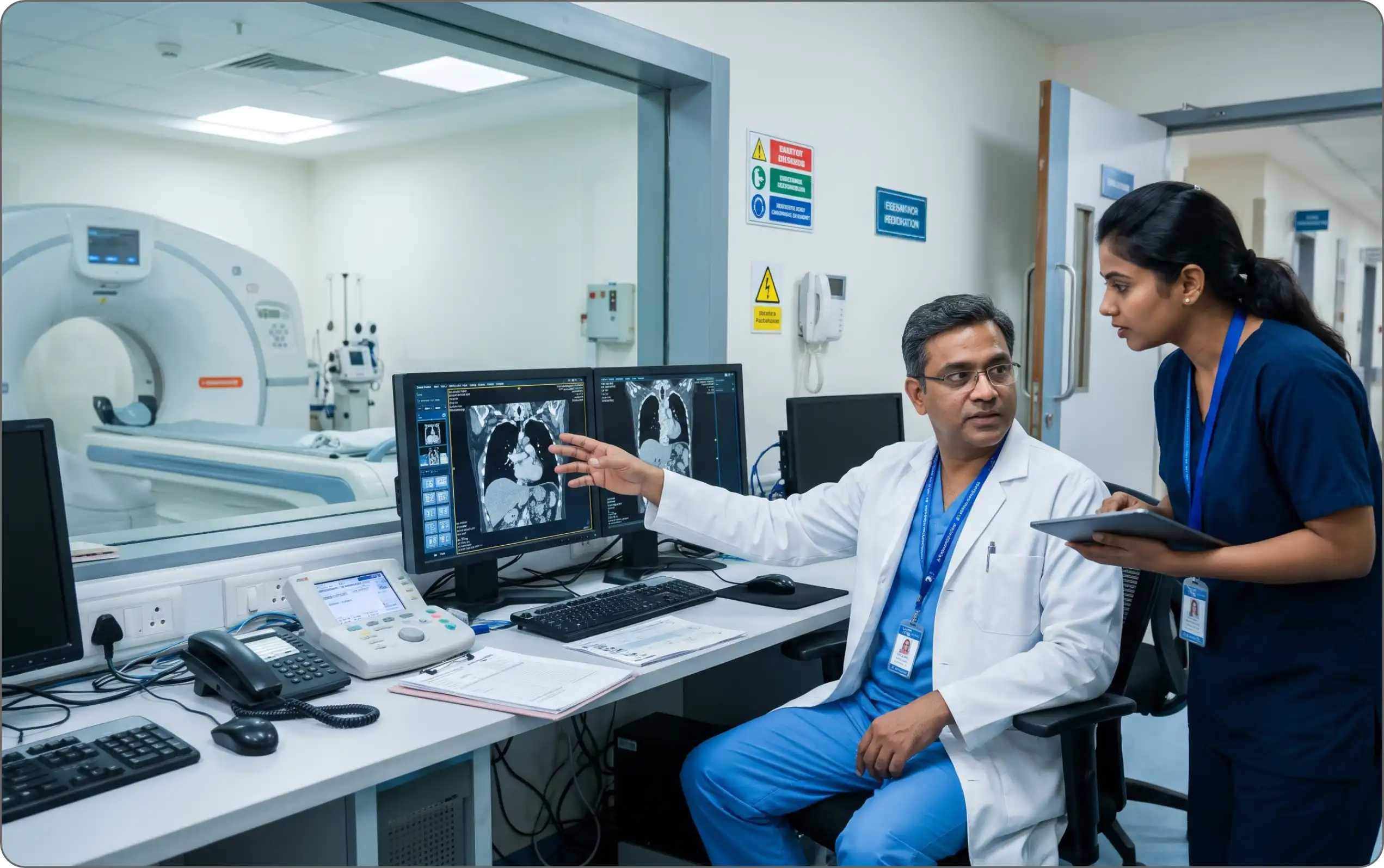
The Department of Radiology at Apex Group of Hospitals offers scans and image-guided procedures at its NABH-accredited units in Borivali, Kandivali, and Mulund. Patients looking for a radiologist in Mumbai will find full-time radiologists and interventional specialists on-site, so urgent scans do not have to wait for off-site reporting or visiting doctors. A radiologist is a medical specialist who interprets medical images and prepares diagnostic reports. In interventional work, the radiologist also uses imaging to guide treatment through a small incision.
As a radiology hospital in Mumbai, Apex covers everything from routine X-rays and ultrasound examinations to CT and MRI scans, as well as interventional procedures. The imaging suites have multi-detector CT scanners, high-field MRI systems, digital mammography units, and colour Doppler ultrasound. These tools help doctors see inside the body clearly and plan the right care.
A scan is one part of finding the cause, and your treating doctor reads it along with your symptoms and examination. Those searching for a diagnostic imaging centre in Mumbai, near a hospital, will find that reports reach the treating doctor quickly through a digital system known as PACS, allowing decisions to be made without delay.
The Radiology Department at Apex Group of Hospitals supports a wide range of medical specialties. Scans show what an examination cannot, such as a small fracture, an early tumour, a blocked artery, or bleeding inside the brain. Residents can arrange imaging on their doctor's advice with a radiologist in Borivali at the unit nearest home. Apex Diagnostic Imaging in Mumbai covers X-ray, ultrasound, mammography, CT, and MRI scans.
Imaging is commonly used to assess the following concerns:
Imaging is advised by a doctor for a specific question. Not every symptom needs a scan, and the radiologist and referring doctor choose the test that gives the most useful answer with the least radiation. Preparation instructions, such as fasting or a full bladder, are given in advance.
An accurate diagnosis depends on high-quality images and careful reading of them. Apex Group of Hospitals provides imaging at Borivali, Kandivali, and Mulund, which keeps tests close to consultation, emergency care, and treatment.
Book An Appointment
From consultation to treatment and recovery, our doctors across Borivali, Kandivali and Mulund are committed to delivering quality healthcare with excellence, compassion and trust.
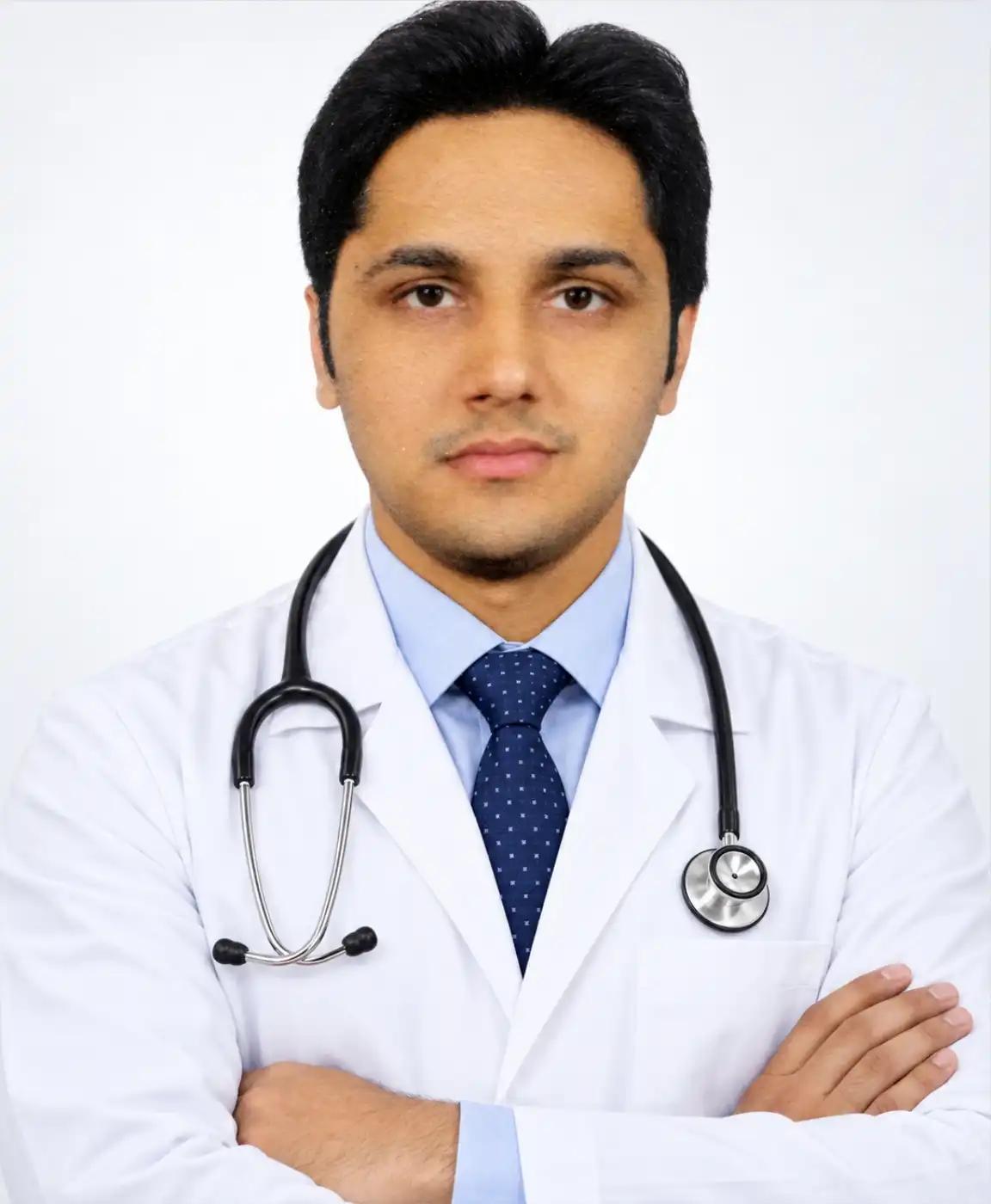
MBBS, MD (Radio Diagnosis/Radiology), DNB
Specialist: Senior Consultant Radiologist
Gender: Male
Language: English, Hindi, Marathi
MBBS, MD (Radio Diagnosis/Radiology), DNB
Specialist: Senior Consultant Radiologist
Gender: Male
Language: English, Hindi, Marathi