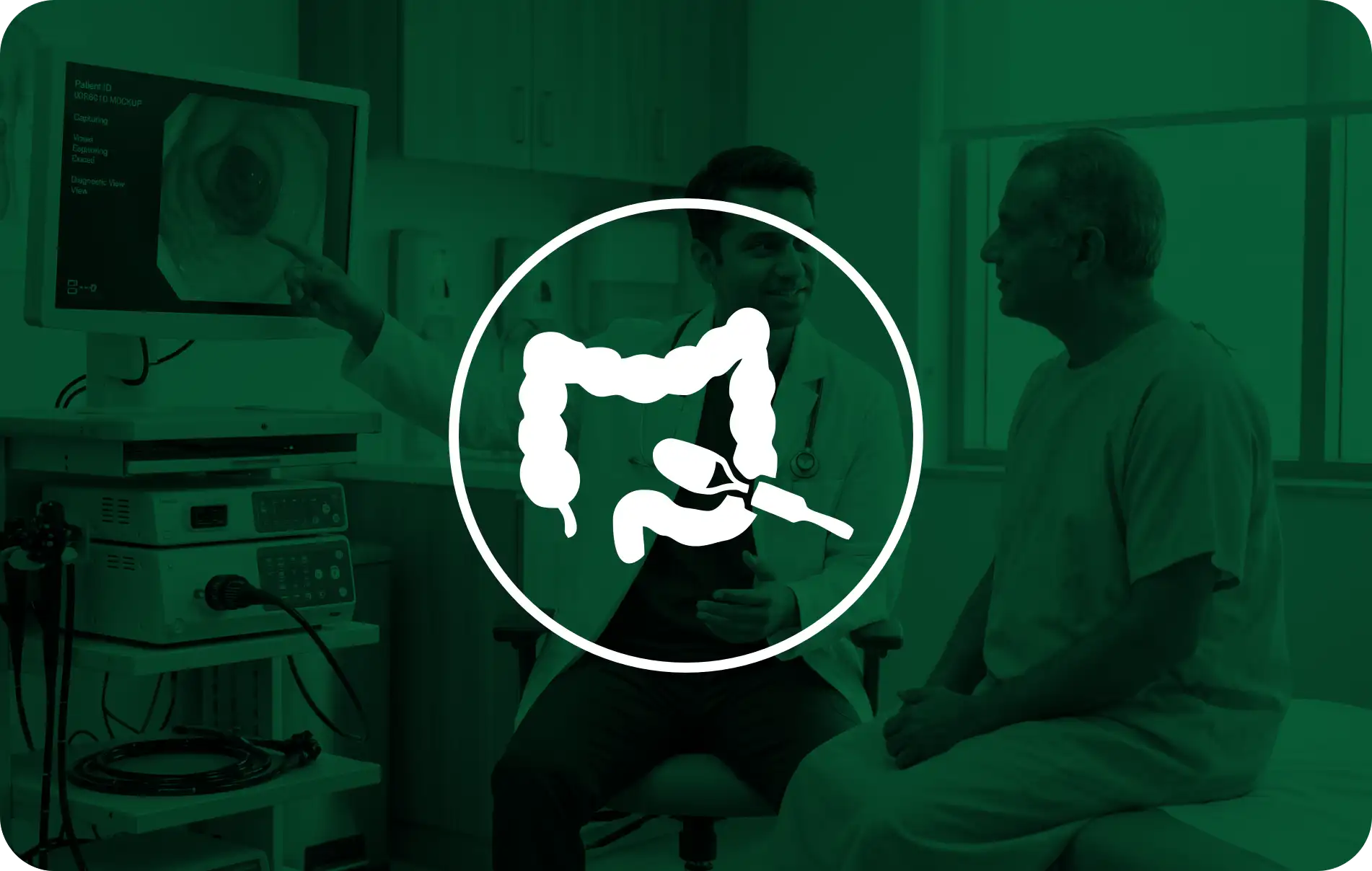
Endoscopic mucosal resection removes abnormal tissue from the inner lining of the digestive tract through an endoscope, with no cut on the skin. It is used for selected flat or slightly raised polyps and early lesions in the food pipe, stomach and colon that remain in the superficial layers of the wall. Removing such lesions early can prevent them from growing or turning cancerous.
The technique is carefully staged. The doctor first examines the lesion closely and may take a biopsy. A fluid is then injected under it, which lifts it away from the deeper muscle layer and makes removal safer. A wire loop called a snare is placed around the raised area, and the tissue is cut away, often using a small electric current. At Apex, the removed tissue is sent to the laboratory to confirm the diagnosis and to check whether the edges are clear.
Patients are observed after the procedure. Depending on the size of the lesion, the doctor may advise a liquid or soft diet for a short period. A follow-up endoscopy is often arranged to check the site and make sure nothing has been left behind. Suitability depends on the lesion's size, position and appearance, and some lesions are better treated by other endoscopic methods or surgery.
How the Procedure Can Help
EMR can remove early lesions while preserving the organ, which may avoid major surgery in suitable patients. It also gives the pathologist a complete specimen, which is more reliable than small biopsy fragments.
Risks and Considerations
Risks include bleeding during or after the procedure, a tear in the wall, narrowing at the site and incomplete removal that may need a repeat procedure. Patients taking blood thinners need specific instructions. Black stools, severe pain or fever after EMR need immediate attention.