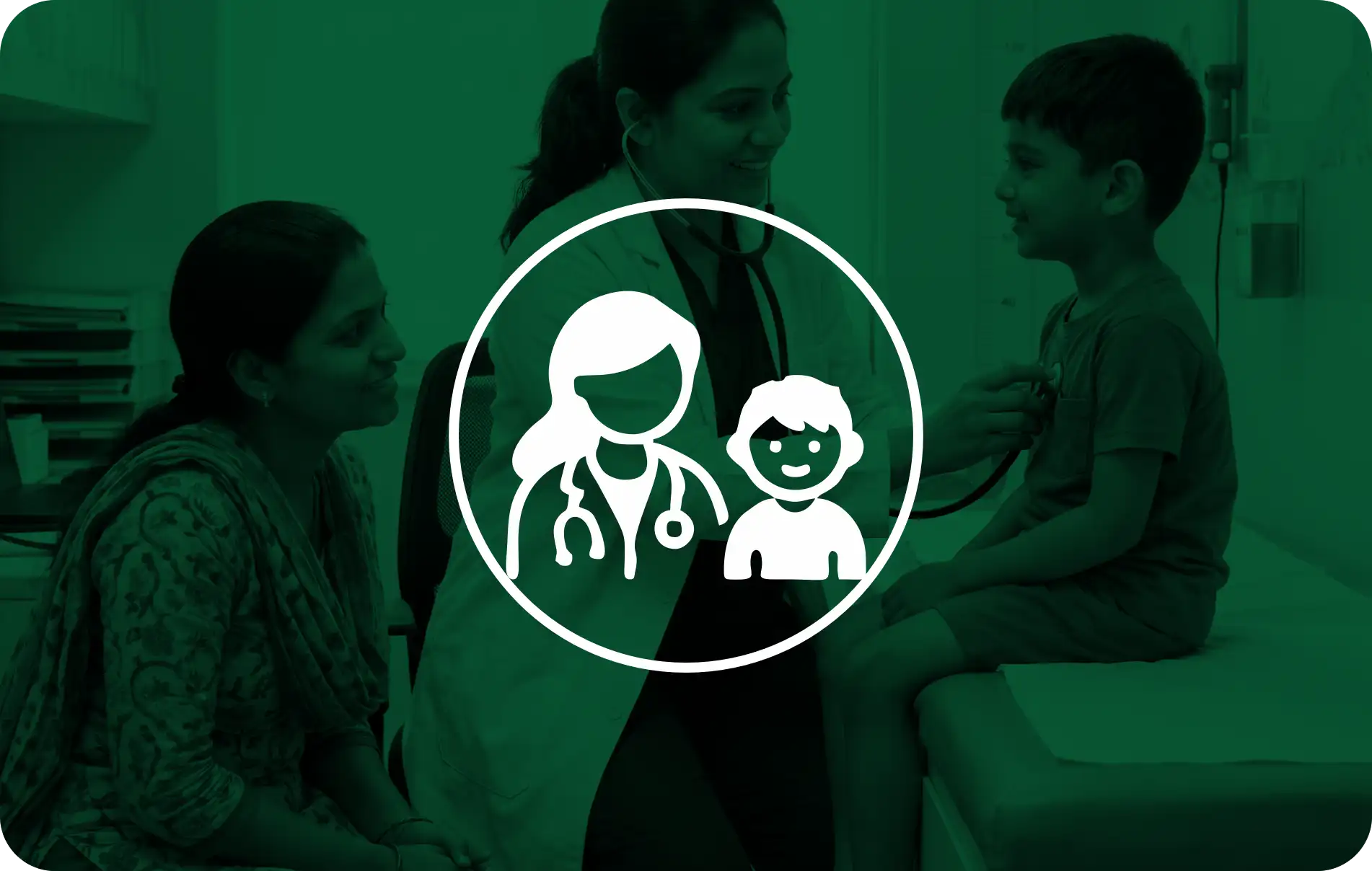
A well-child examination is a routine check of a healthy child's growth, development and general health. Visits are scheduled more often in the first two years and then yearly. The doctor measures the child's weight, height and head size, checks the heart, lungs and abdomen, and asks about feeding, sleep, behaviour and school.
Parents are encouraged to share concerns, and the visit is also a time to review immunisations, nutrition and safety, such as car seats, water safety and screen time. Growth is plotted on charts to see whether the child is following a healthy pattern.
How the Procedure Can Help
Regular checks can find growth, development and nutrition problems early and give parents trusted guidance.
Risks and Considerations
The examination is safe and painless. A child who is unwell on the day may need to return for the visit. If concerning findings arise, we will explain them to the parents and arrange further tests.
Immunisation protects children from serious infections by training their bodies to recognise them. Schedules, such as the one recommended by the Indian Academy of Pediatrics, begin at birth and continue through adolescence. They cover diseases such as tuberculosis, polio, hepatitis B, diphtheria, tetanus, whooping cough, measles, rubella, typhoid and others.
Families seeking vaccination for children in Mumbai at Apex are told which vaccines are due, which are optional and what to expect. The doctor checks that the child is well enough, and the vaccine is given as an injection or oral drops. Parents wait briefly afterwards for observation, and records are updated.
How the Procedure Can Help
Vaccines prevent illnesses that can cause serious complications, and they also protect other children in the community.
Risks and Considerations
Soreness, mild fever and fussiness for a day or two are common. Serious allergic reactions are rare. Parents should report high fever, persistent crying, swelling, seizures or breathing difficulty without delay.
Developmental screening checks whether a child is learning to move, speak, play and interact at the expected pace. It uses questions for parents and simple tasks for the child, covering motor skills, language, thinking and social behaviour.
Screening is done at routine visits, with additional autism-focused screening commonly done around 18 and 24 months. Parents are asked what the child can do, and the doctor observes the child. If results raise concern, a fuller assessment is arranged. Hearing and vision are checked along with other tests, since problems there can delay speech and learning.
How the Procedure Can Help
Early detection allows therapy and support to begin when the child's brain is most able to adapt.
Risks and Considerations
Screening carries no physical risk. A positive result does not confirm a diagnosis, and a normal result does not rule out later concerns, so we continue to follow progress.
Hearing screening checks whether a child can hear well enough to learn speech and language. In newborns, it is often done within the first days of life using a soft earpiece that measures the ear's response to sound, and it takes only a few minutes while the baby sleeps. Older children are tested with sounds and responses.
If the first test is not passed, a repeat or a more detailed test is arranged. Fluid in the ear, a blocked ear canal, or noise in the room may affect the first result, so a failed screen does not always indicate hearing loss.
How the Procedure Can Help
Early identification of hearing loss allows hearing aids, therapy or other treatment before speech delay develops.
Risks and Considerations
The test is painless and safe. Children with infections or earwax may need treatment first. Parents should seek an assessment if a child seems not to respond to sounds or speech develops slowly.
Vision screening checks that a child's eyes are healthy and seeing clearly. In newborns and infants, the doctor checks the red reflex, eye alignment and whether the eyes follow a light or toy. Older children have their vision tested with charts and age-appropriate tests.
Early detection matters for conditions such as lazy eye (amblyopia), squint and refractive errors, which respond best to treatment in early childhood. Children rarely complain of poor vision, so signs such as squinting, sitting close to the television, tilting the head or headaches are worth reporting.
How the Procedure Can Help
Finding vision problems early allows glasses, patching, or other treatment while the visual system is still developing.
Risks and Considerations
Screening is painless and safe. Children who do not pass are referred to an eye specialist for a full examination, and some may need drops for a detailed assessment